From ZX Spectrum to AI Agents: 30+ Years in Code
The story of how a guy who received a $10 check for a shareware game in '99 now, 27+ years later, builds a service where AI agents work on full autopilot, handling complex business processes.
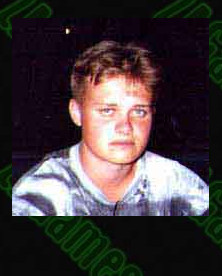

Disassembler and 48 Kilobytes
ZX Spectrum, BASIC, and disappointment — it was too slow. There were no books on Z80 assembly, so I found a disassembler, took other people's programs, and took them apart byte by byte to understand how everything worked. My first assembly program drew a single dot on the screen — but compared to BASIC, it was cosmic speed. Later, I wrote an animation editor that fit 40 frames and 5 seconds of digitized sound into 48 kilobytes. This principle — 'resources are finite, every byte counts' — I carry into every project to this day.
Shareware, First Check, and MACHINE GUN
By day, I worked as a sysadmin (the 'fix-it-all IT guy') in a local office, and by night I entered the shareware market: writing Windows games in Visual C++ and DirectX. I was my own developer, artist, and sound engineer. That's when I received my first $10 check from the US for software registration — it was the first time my code brought me money directly from a user. In 1999, I released the game MACHINE GUN. Its release coincidentally overlapped with the bombing of Yugoslavia: the military theme caught people's attention, the game gained unexpected widespread popularity, and was featured in the gaming magazine 'Igromania'. The website from those years, zagames.narod.ru, is still alive today — like a time capsule.
Shareholders' Meetings and Moving to Moscow
Parallel to games, I started solving real business problems. I developed a voting system for a registrar. For half a year, I personally conducted shareholders' meetings, where my system provided a preliminary vote count right on the spot. This was no longer just code for the sake of code, but the automation of a critical process, where a mistake would have been extremely costly. It was precisely after the successful operation of this system that I was headhunted to Moscow.
Perl, Real Estate, and Market Leadership
In Moscow, I learned Perl backend development from scratch. Within a few years, the real estate system I worked on became a market leader. Then I built my own apartment rental database: backend on Perl, frontend on Visual C. This was the era when I learned how to take a product from an idea to actual sales — and sustain an office and a team with it.
Enterprise, Highload, and the First SEO Service
Years spent in large companies: Perl, PHP, Erlang for high loads, banking systems. A deep dive into enterprise architecture. I don't disclose the company names due to NDAs, and some of them have already closed, but that is exactly where I went through the tough school of commercial development. In parallel, I studied SEO algorithms and built my first service for generating content briefs using Perl + Mojolicious + MongoDB. It sold itself without any advertising. This was the first step toward product automation.
Python, LangGraph, and the Birth of OrganicFlow
I learned Python, built a search database of 5 million domains on ElasticSearch for niche analysis, and then ChatGPT arrived. I didn't become a 'prompt engineer', but went hardcore instead: local LLMs, pgvector, multi-agent systems on LangGraph. That's how OrganicFlow was born: a system where AI itself builds an article outline, writes it, and publishes it. The circle was complete — from a manual disassembler to autonomous agents. Now I'm developing my SaaS and helping enterprise companies integrate AI into their internal infrastructure.
Need process automation or SEO on autopilot?
Describe your task. I don't take projects for the sake of hype — only if AI will genuinely save you time or bring in money.
> Message on Telegram